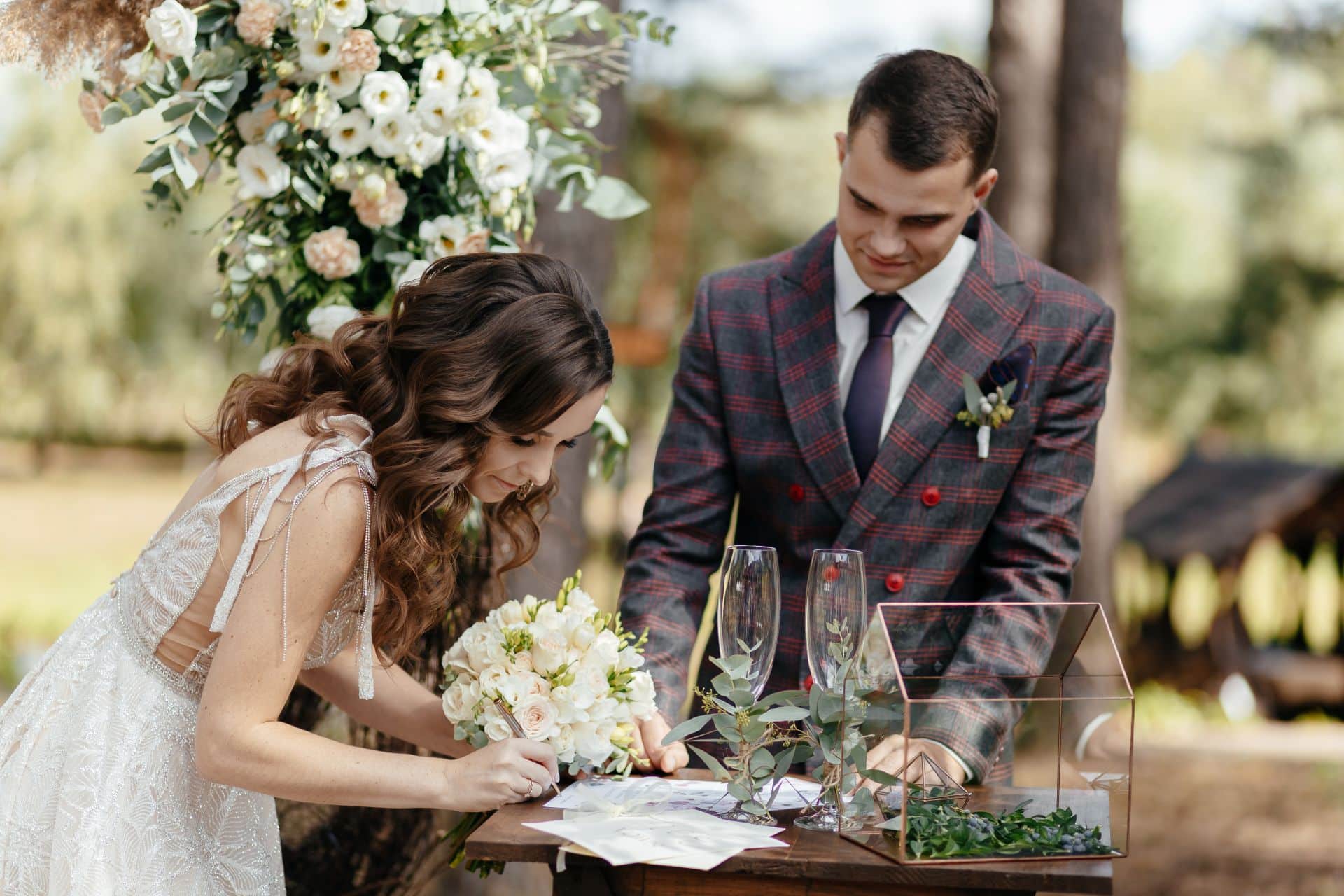


5 Important Things To Know About Celebrant Weddings
You may have noticed a marked increase in people talking about celebrant weddings over the past few years. Perhaps you’ve been to one yourself, seen one on TV, or simply heard on the grapevine that celebrant weddings are the new big thing. But exactly what is a celebrant wedding? And is it the right choice for you? In this blog we break it down to the top 5 things you need to know about celebrant weddings.

1. You will need to do the legal bit first
In England and Wales, celebrants cannot currently conduct legally binding marriages or civil partnerships. In Scotland and Northern Ireland, registered humanist celebrants are authorised to conduct legal marriages, but independent celebrants are not.
BUT, do not let this put you off. Being separate from the legal process means that celebrants are free of the restrictions on location, timing and content that apply to civil ceremonies (more on this later). That’s why so many couples now choose to be legally married first with a registrar or authorised minister, and then hold a personal wedding ceremony led by a celebrant.
2. Celebrants can be humanist or independent
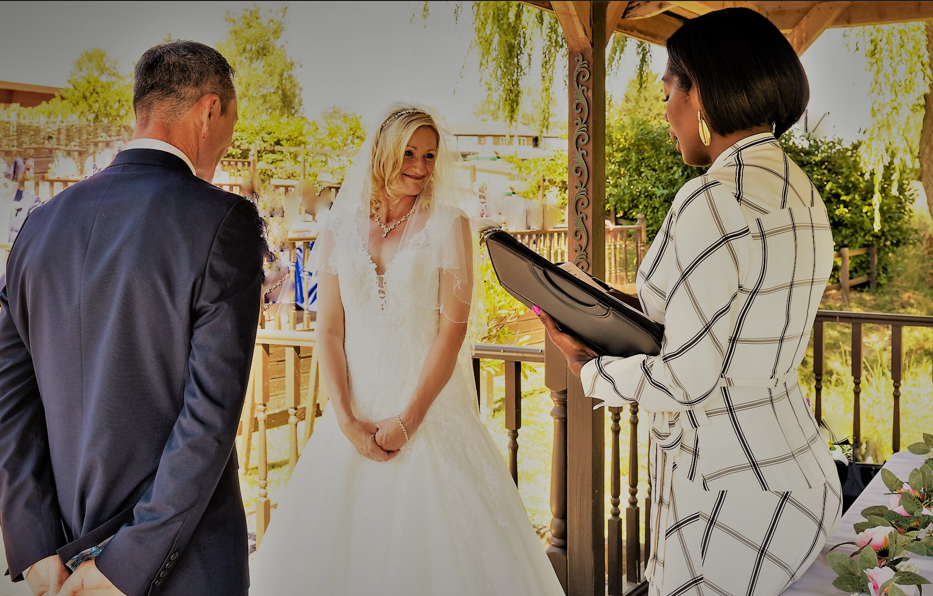
You may have heard the terms ‘independent celebrant’ and ‘humanist celebrant’. The two roles are very similar, but a humanist celebrant represents humanism as a belief system, often regulated by Humanists UK, while an independent celebrant does not represent any belief system so is entirely independent, although they may belong to a trade body such as the Association of Independent Celebrants.
This means that you have the freedom to choose the celebrant who fits you perfectly as a couple. If you are humanists yourselves, you may wish to choose a humanist celebrant. If you are spiritual people, you may want an independent celebrant who is spiritual in outlook. If you are a multifaith couple you may choose an independent celebrant who can represent both your world views equally. And if you’re after a relaxed and fun wedding, you might look for a celebrant with an outgoing, charismatic style. The choice is yours!

3. You can hold your wedding anywhere
Yes, anywhere… as long as you have the owner’s permission of course. Celebrants are not bound by legal restrictions, so the ceremonies they lead are purely celebratory and can take place wherever you choose. This means that your venue does not need to hold a civil ceremony licence (although celebrants often work at licensed venues too).
Popular locations for celebrant weddings are woodlands, fields, farms and beaches, and you can even hold your ceremony at home if you wish. You really can be as adventurous as you like with your choice of ceremony location. Some celebrants may draw the line at skydiving or scuba diving – but you can always ask!

4. Your celebrant will get to know you before your wedding day
This is one of the best things about celebrant weddings – the person you choose to create and lead your ceremony will have got to know you as a couple before the big day… and you will have got to know them. Many couples say it feels like they have a friend up there ‘marrying’ them, because they have become close with their celebrant throughout the planning process.
Generally, when you have booked your celebrant they will meet with you at least once, ideally at your chosen venue, so that you can thoroughly plan how the ceremony will run. They will sit down with you for a good amount of time to ask lots of questions about you, your story and your wishes for the ceremony. They can advise on things like music and reading choices, help you write your vows, and offer inspiration for any symbolic elements you might like to include. Then they will go away and craft a personalised ceremony script for your approval.
You are likely to remain in contact by phone and email during the planning process so there is always someone there to answer any questions or worries you have. You may even like them so much you ask them back one day for a naming ceremony or vow renewal!

5. You may face obstacles - so book early!
Some couples report that their local register office is not too accommodating of celebrant-led weddings and offers very restricted options for their legal civil ceremony to take place. So if you wish to hold a simple statutory ceremony at the register office before your celebrant wedding, you will need to book early to avoid disappointment.
Some couples choose to have two full ceremonies – one with the registrar where they get legally married, and one with a celebrant which can be more flexible and personal. It’s also worth asking your register office if they would be willing to work alongside your chosen celebrant. Some registrars are happy to come to your venue on the same day and conduct the legal part of the ceremony while your celebrant conducts the rest, but this is not always possible. And it does mean you can’t be late (registrars often conduct several ceremonies a day).
If your register office discourages you from using a celebrant, remember that it’s your choice who conducts the ceremony on your special day – make sure you research all the options and make the decision that’s right for you.

Thinking about booking a celebrant for your wedding?
We hope this blog has made you feel a bit more informed about celebrant weddings! If you’d like to find out more and start planning your ceremony, you can find celebrants in your area on the Outdoor Ceremonies directory of celebrants.